
A diagnosis of HIV no longer has to mean a shortened or limited life. With modern antiretroviral therapy, many people with HIV can protect their immune system to live long, healthy lives, maintain meaningful relationships, and have children without passing the virus to sexual partners.
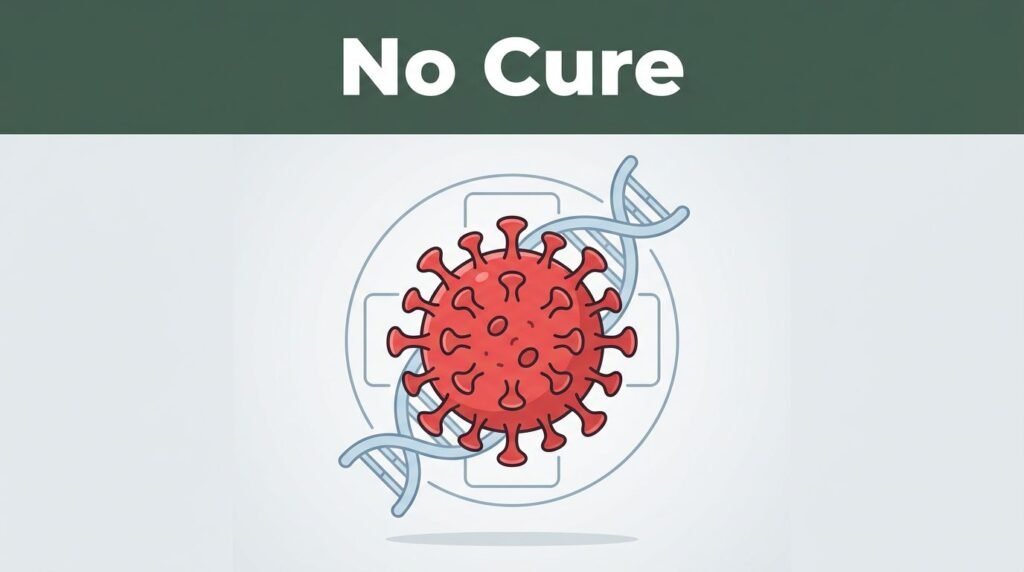
Still, the question remains emotionally important: is there an HIV cure in 2026? The plain answer is no, there is not yet a safe, widely available HIV cure for the general population. However, medical research has produced rare cases of long-term remission and continues to move forward with promising developments.
Understanding the difference between viral suppression, remission, and a functional cure helps separate real scientific progress from misleading headlines.
Key Takeaways
- There is no widely available HIV cure in 2026, but daily antiretroviral therapy can successfully control the virus for a lifetime.
- Taking antiretroviral therapy can reduce HIV to an undetectable viral load, which means there is no risk of sexual HIV transmission when viral suppression is maintained. This is known as U=U.
- A small number of people have entered long-term HIV remission following specialized stem-cell transplants performed to treat life-threatening cancers.
- These types of transplants are not considered practical HIV treatments for the general population because they carry significant health risks.
- Ongoing research into an HIV cure includes the development of antibodies, therapeutic vaccines, gene-based therapies, and innovative methods to target hidden viral reservoirs.
The Short Answer: HIV Is Treatable, but Not Yet Curable
Modern HIV treatment is highly effective. Antiretroviral therapy, usually called ART, stops the virus from making copies of itself. When taken consistently, antiretroviral therapy lowers the amount of HIV in the blood, known as the viral load, to very low or undetectable levels.
However, ART is not a cure. HIV can remain dormant inside some immune cells, forming HIV reservoirs. Within these CD4 T cells, latent HIV can persist and hide from the immune system for years without producing new virus. If treatment stops, the virus can rebound because those reservoirs remain.
The World Health Organization’s HIV facts explain that medication prevents illness and reduces transmission by keeping your viral load suppressed, but people generally need ongoing treatment. Medication works because it blocks viral replication; it does not reliably remove every infected cell from the body.
A cure would need to do one of two things. It could eliminate all HIV capable of restarting infection, sometimes called a sterilizing cure. Or it could allow a person to control HIV without ART for a long time, often called sustained remission or a functional cure.
Researchers use careful language because tests cannot prove that every trace of HIV has disappeared from every tissue. Long-term remission is still a major achievement, but it is not the same as a routine medical cure.
Antiretroviral therapy can suppress HIV to undetectable levels, but it does not remove HIV reservoirs from the body.
What Undetectable Means and Why U=U Matters
For people living with HIV, achieving viral suppression is one of the most meaningful outcomes of medical care. A viral load test is the primary tool used to measure exactly how much HIV is present in a blood sample. When antiretroviral therapy (ART) works effectively, this viral load can become undetectable, which allows the immune system to recover and strengthen over time.
Being undetectable does not mean HIV has vanished from the body. It simply means the amount of virus in the blood is below the level that a standard test can measure. In the context of sexual health, the scientific evidence behind U=U relies on maintaining an undetectable viral load of below 200 copies per milliliter through consistent treatment.
U=U means “Undetectable = Untransmittable.” A person who maintains an undetectable viral load does not transmit HIV through sex. Large clinical studies, including the PARTNER and Opposites Attract trials, found no cases of linked sexual HIV transmission when the partner with HIV had sustained viral suppression.
This message specifically addresses HIV transmission through sex. It does not mean a person cannot acquire or pass on other sexually transmitted infections. Using condoms, regular testing, staying up to date on vaccines, and having open conversations with partners remain essential parts of broader sexual health.
Consistent testing is vital because your status must be actively maintained. Factors such as missed doses, drug interactions, illness, or challenges with medication access can affect treatment success. A clinician can help you interpret your viral load results and adjust your medication regimen whenever needed.
The CDC’s information on viral suppression offers a clear overview of how treatment serves as a form of prevention. For many people, daily oral medication remains highly effective. Long-acting injectable treatment is also an option for some patients, depending on their medical history, prior resistance testing, and the ability to attend regularly scheduled appointments.
Why the Reported HIV Cure Cases Don’t Apply to Most People
Several individuals have achieved long-term viral remission after receiving an allogeneic stem cell transplant. These instances are frequently highlighted in news reports as examples of an HIV cure. While these cases are medically significant, they occurred under extraordinary circumstances that cannot be replicated for the general population.
The first widely known case involved Timothy Ray Brown, often referred to as the Berlin patient. He lived with HIV and acute myeloid leukemia. To treat his cancer, his doctors performed a procedure involving intensive chemotherapy, radiation, and a transplant from a donor carrying a rare CCR5 mutation.
Most HIV strains use the CCR5 receptor to enter immune cells. The donor cells in the Berlin patient lacked functional CCR5 receptors, which made the new immune system resistant to most CCR5-tropic HIV. Brown remained free of detectable virus without antiretroviral therapy (ART) until he passed away from leukemia in 2020.
Later instances of long-term viral remission included Adam Castillejo, known as the London patient, and other individuals treated for malignancies such as leukemia or lymphoma. Some of these transplant-associated remissions involved donors who did not carry the specific CCR5 mutation. This suggests that the transplant process, the infusion of donor immune cells, the preceding cancer treatment, and the reduction of HIV reservoirs may all contribute to the outcome.
Despite these breakthroughs, a transplant is not a viable HIV cure for people who are otherwise healthy. Medical professionals only utilize this procedure when a patient has a life-threatening blood cancer that requires a replacement of the immune system. The process carries a high risk of severe complications, including infections, organ damage, graft-versus-host disease, infertility, and death.
The NIH overview of HIV cure research clarifies this distinction: these cases prove that viral remission is biologically possible, but they do not provide a scalable treatment plan for the millions of people currently living healthy, managed lives on ART.
What HIV Cure Research Is Testing in 2026
Current HIV cure research is primarily focused on the HIV reservoir, which consists of latent HIV hidden in cells where antiretroviral therapy cannot reach. These reservoirs are the central obstacle to viral eradication because the virus can remain inactive for years and then restart replication if treatment is discontinued.
One area of active investigation is the shock and kill strategy. This approach uses specialized medications or immune-based treatments to wake dormant, HIV-infected cells so the immune system or other therapies can identify and clear them. Early clinical trials have shown that waking these reservoirs is not sufficient on its own, as the body must also be trained to effectively recognize and eliminate the infected cells.
Broadly neutralizing antibodies, known as bNAbs, are another promising field. These laboratory-made proteins recognize parts of the virus that remain stable over time. In some clinical trials, combinations of bNAbs have helped delay viral rebound after carefully monitored treatment interruptions, though they have not yet produced a dependable cure for the general population.
Researchers are also advancing therapeutic vaccines, which aim to train the immune system to better control the virus in people already living with HIV. Alongside these efforts, gene therapy has become a major focus. Scientists are utilizing genetic editing, such as CRISPR, to disable the HIV genetic material inside infected cells or to block the virus from entering healthy cells by modifying the CCR5 receptor. To improve these delivery methods, researchers are increasingly looking toward mRNA technology delivered via lipid nanoparticles. While these strategies are innovative, challenges such as safety, off-target genetic changes, and long-term access remain significant hurdles.
Clinical trials in this space may include an analytic treatment interruption, where researchers pause antiretroviral therapy under close medical supervision to observe if or when the virus returns. This is strictly a research procedure and is not something to attempt independently. A treatment interruption can lead to rapid viral rebound, weaken immune control, increase the risk of transmission, and potentially allow for the development of drug resistance.
The UNAIDS fact sheet puts this research into a broader global context. Consistent HIV treatment access, routine viral-load testing, and the delivery of stigma-free care remain urgent priorities while the search for a permanent cure continues.
What to Do While HIV Cure Studies Continue
A future cure would be welcome. Today, the strongest protection for your health is starting antiretroviral therapy promptly and continuing it exactly as prescribed. Effective treatment protects the immune system and prevents HIV-related illness.
If you live with HIV, bring any news about potential cures or clinical trials to your HIV clinician before changing your routine. A trustworthy conversation can help you distinguish between established standards of care, early-stage research, and misleading social-media claims.
A few practical steps can keep your care on track:
- Keep regular viral-load appointments and ask your doctor what your latest result means for your health.
- Tell your clinician about any new medicines, supplements, or side effects you experience.
- Do not stop your medication because of a cure headline or an unverified product you see online.
- Ask about mental health support, insurance assistance, and local HIV services if access to care feels difficult.
This article provides general health information, not personal medical advice. Discuss all treatment decisions, potential treatment interruptions, interest in clinical trials, pregnancy plans, and medication changes with a qualified HIV clinician.
Frequently Asked Questions
If a person is undetectable, does that mean they are cured of HIV?
No, being undetectable does not mean you are cured of HIV. It simply means that your antiretroviral therapy has reduced the amount of virus in your blood to a level too low for standard tests to detect, which effectively prevents sexual transmission and protects your health.
Why are stem cell transplants not used to cure everyone with HIV?
Stem cell transplants are extremely complex, dangerous, and expensive medical procedures typically reserved for people with life-threatening cancers. They carry significant risks such as infection, organ failure, and graft-versus-host disease, making them inappropriate as a routine treatment for HIV.
Is it safe to stop my HIV medication if I hear about a new treatment discovery?
It is never safe to stop your medication based on news headlines or unverified reports. Stopping your antiretroviral therapy can cause the virus to rebound rapidly, potentially leading to increased drug resistance and damage to your immune system.
How long will it take for a widely available HIV cure to be developed?
While research into gene therapies, therapeutic vaccines, and antibody treatments is ongoing, there is currently no estimated timeline for a widely available cure. Science is moving forward, but developing a safe, effective, and scalable method requires years of rigorous clinical testing to ensure it works for the general population.
The Outlook for an HIV Cure
While a definitive HIV cure remains unavailable for the general public in 2026, the virus is highly manageable through modern antiretroviral therapy. Maintaining an undetectable viral load through consistent medication allows individuals to protect their long-term health and ensures that CD4 T cells remain at stable, healthy levels. Because these CD4 T cells are essential for a robust immune system, prioritizing treatment remains the gold standard for personal wellness and preventing the risk of sexual transmission.
The rare cases of long-term remission following stem cell transplants have proven that sustained HIV control without daily medication is biologically possible. Current scientific efforts are now focused on moving beyond these extreme medical interventions to develop a true eradication cure that could be safely implemented on a global scale. Researchers are investigating various gene therapies and immunotherapies to reach this goal of a scalable cure that eliminates the need for lifelong treatment.
For now, effective HIV treatment remains the most reliable path to longevity. While research continues to push the boundaries of what is possible, staying on your current regimen protects your immune system and maintains your status of having an undetectable viral load, which provides immediate, life-saving results.
How to Naturally Improve Your Family’s Immunity: Proven Gut Health Tips for 2025
Related Posts