
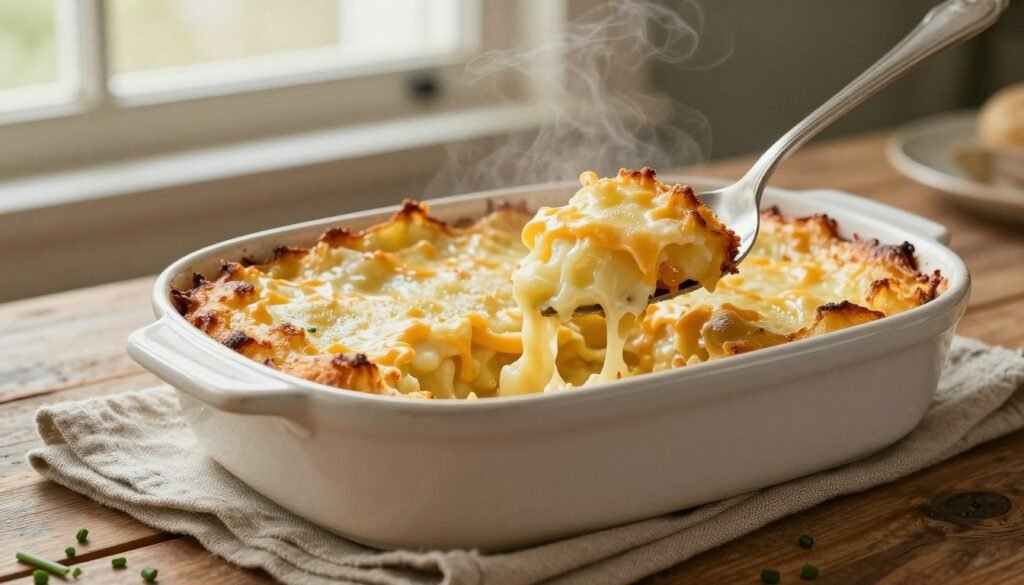

A warm, creamy potato casserole with a crispy, cheesy topping makes a comforting side dish for family dinners and holiday meals. These cheesy potato variations include a classic hash brown casserole, a cheesy baked dish made with fresh potato slices, and a creamy, spoonable version prepared on the stovetop.
Whether you prefer the convenience of frozen potatoes or the tender, layered texture of fresh potatoes, these Cheesy Potatoes Recipes offer delicious options for any occasion. For the best results, coat the potatoes evenly and add the crunchy topping at the right time. Start with the classic casserole, then choose the version that best suits your meal.
Key Takeaways
- These cheesy potatoes recipes include a classic hash brown casserole, fresh sliced potatoes baked with cheese, and a creamy stovetop version.
- Frozen hash browns make the classic casserole easy to assemble, while thinly sliced fresh potatoes create a tender, layered texture.
- Coat potatoes evenly in the creamy mixture, and add crunchy toppings near baking time to help them stay crisp.
- Choose the style that fits your meal, then refrigerate leftovers promptly and use them within three to four days, following USDA leftover food safety guidance.
Cheesy potatoes recipes for every craving
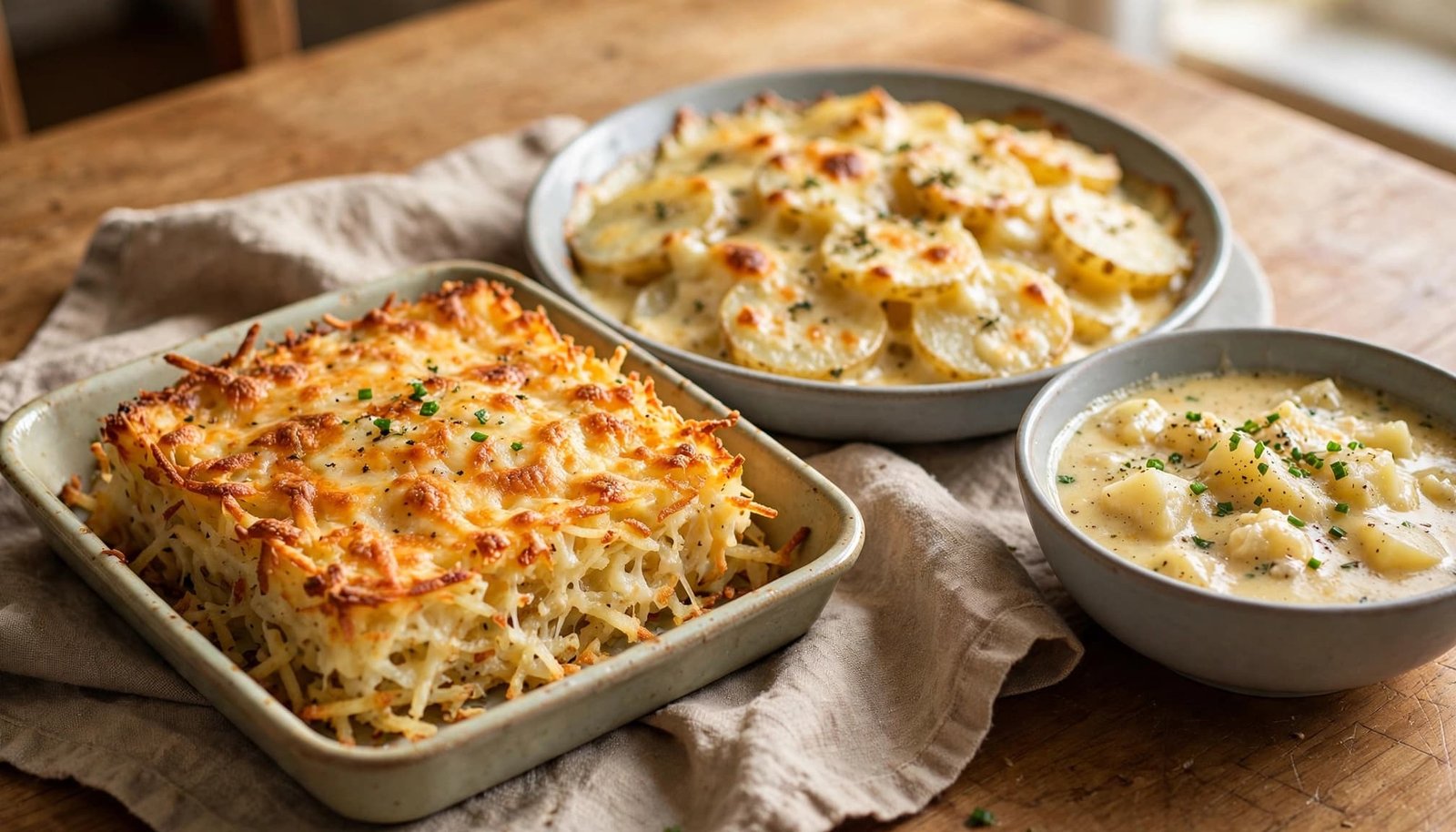
These three recipes cover the familiar crunchy hash brown casserole, creamy baked potato slices, and a quick, spoonable soup. Each uses a different potato style, so choose based on the texture and cooking time you want.
Classic hash brown casserole with a crunchy topping
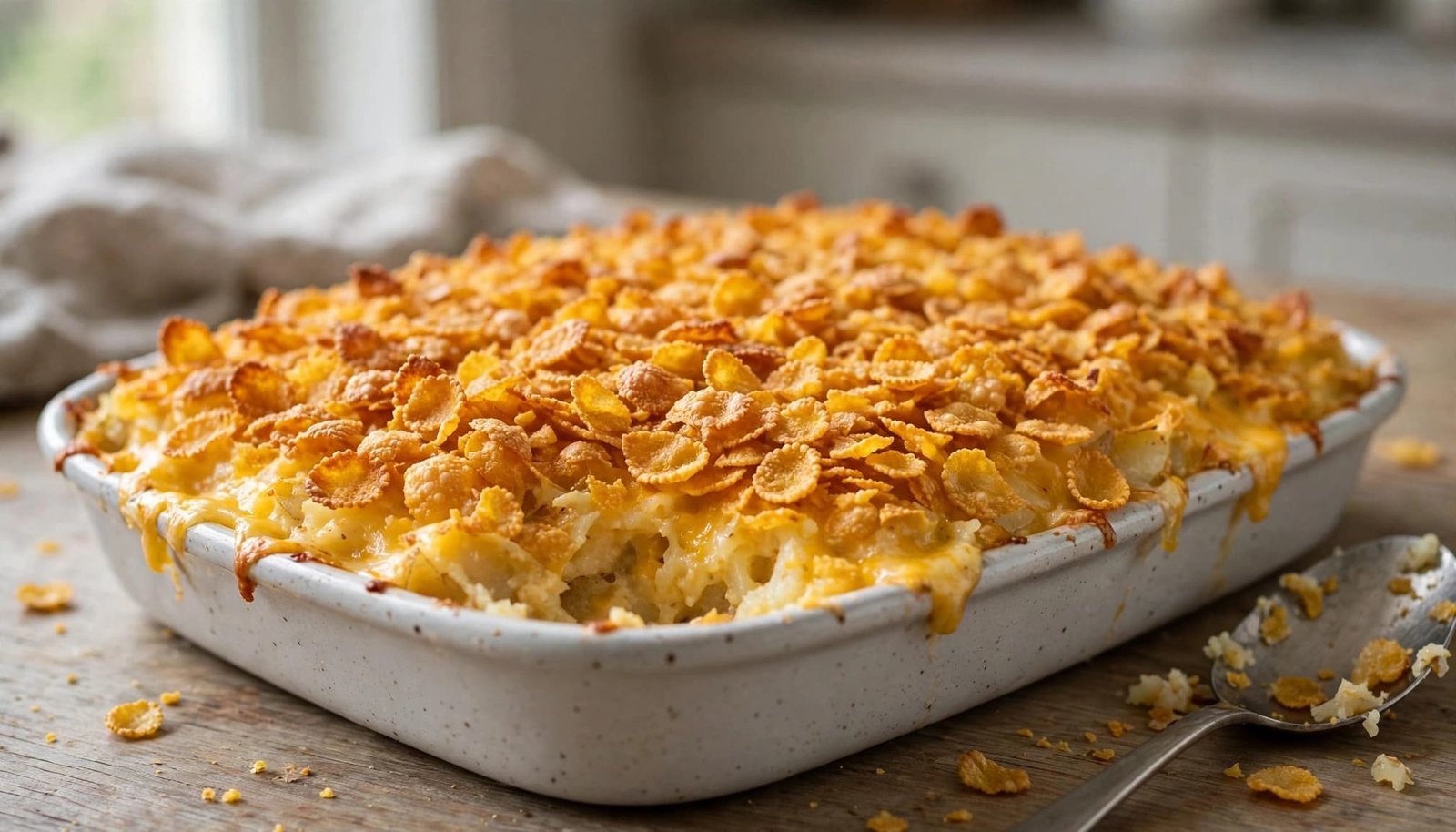
This classic cheesy potato casserole uses frozen potatoes and a crispy cornflake topping. Thaw the hash browns in the refrigerator first, then drain off any excess moisture.
You can adapt the mixture for a slow cooker; keep the cornflake topping separate until serving so it stays crisp.
Ingredients
- 1 package (30 ounces) frozen shredded or diced hash browns, thawed
- 1 can (10.5 ounces) condensed cream of chicken soup
- 1 cup sour cream
- 2 cups shredded cheddar cheese
- 4 tablespoons butter, melted, plus 2 tablespoons for the topping
- 1/2 small onion, finely diced, optional
- 1/2 teaspoon kosher salt and 1/4 teaspoon black pepper
- 2 cups cornflakes, lightly crushed
Directions
- Heat the oven to 350°F and grease a 9-by-13-inch baking dish.
- In a large bowl, stir together the soup, sour cream, 4 tablespoons melted butter, salt, and pepper. Add the hash browns, cheddar, and onion, if using. Fold until the potatoes are evenly coated.
- Spread the mixture in the dish, cover with foil, and cook for 30 minutes.
- Meanwhile, toss the crushed cornflakes with the remaining 2 tablespoons melted butter. Remove the foil, scatter the topping over the casserole, and return the dish to the oven, uncovered, for 15 to 25 minutes, until the center is hot and bubbly and the topping is crisp and golden.
Add the topping for the uncovered portion of cooking, rather than at the start, so it keeps its crunch.
Fresh sliced potatoes with a creamy au gratin finish
Thinly sliced potatoes bake in a cheddar cream sauce until tender, with a browned, cheese-forward top. A mandoline makes even slices, but a sharp knife works well too.
Ingredients
- 2 pounds Yukon Gold potatoes, peeled if desired and sliced about 1/8 inch thick
- 2 tablespoons butter
- 2 tablespoons all-purpose flour
- 1 1/2 cups whole milk
- 1/2 cup heavy cream
- 1 1/2 cups shredded sharp cheddar, divided
- 1/2 teaspoon salt and 1/4 teaspoon black pepper
Directions
- Heat the oven to 375°F and butter a 2-quart baking dish. Melt the butter in a saucepan over medium heat, whisk in the flour, and cook for 1 minute.
- Slowly whisk in the milk and cream. Stir until the sauce thickens, about 3 to 5 minutes, then remove it from the heat and stir in 1 cup cheddar, salt, and pepper.
- Arrange the potato slices in the dish and pour the sauce over them. Cover tightly with foil and bake for 45 minutes.
- Remove the foil, sprinkle on the remaining cheese, and bake for 20 to 30 minutes more. The potatoes should be fork-tender, and the top should be golden.
A quick stovetop take when you want something spoonable
For a softer option, make cheesy potato soup. The gentle heat melts the cheese smoothly; a hard boil can make the dairy separate or turn grainy.
Ingredients
- 1 1/2 pounds russet potatoes, peeled and cut into 1/2-inch cubes
- 4 cups low-sodium chicken or vegetable broth
- 1 cup whole milk
- 1 1/2 cups shredded cheddar
- 2 tablespoons butter
- 1/2 teaspoon salt and 1/4 teaspoon black pepper
Directions
- Combine the potatoes and broth in a pot. Bring to a boil, then lower the heat and simmer for 15 to 20 minutes, until a fork slides easily into the potato cubes.
- Stir in the milk and butter, then reduce the heat to low. Add the cheddar a handful at a time, stirring until melted. Season with salt and pepper, and serve once the soup is steaming, without letting it boil.
Bake times vary with the dish, potato thickness, and whether ingredients start cold. For leftovers, reheat the center to 165°F, following FoodSafety.gov’s temperature guidance.
Choose potatoes, cheese, and a creamy base that fit your recipe
The right ingredients depend on the texture you want. Frozen hash browns make a quick, cohesive casserole, while fresh potatoes give you more control over the shape and tenderness of each bite. Choose the cheese and creamy base to match, then coat the potatoes well so every serving stays moist.
Match the potato cut to the cooking method
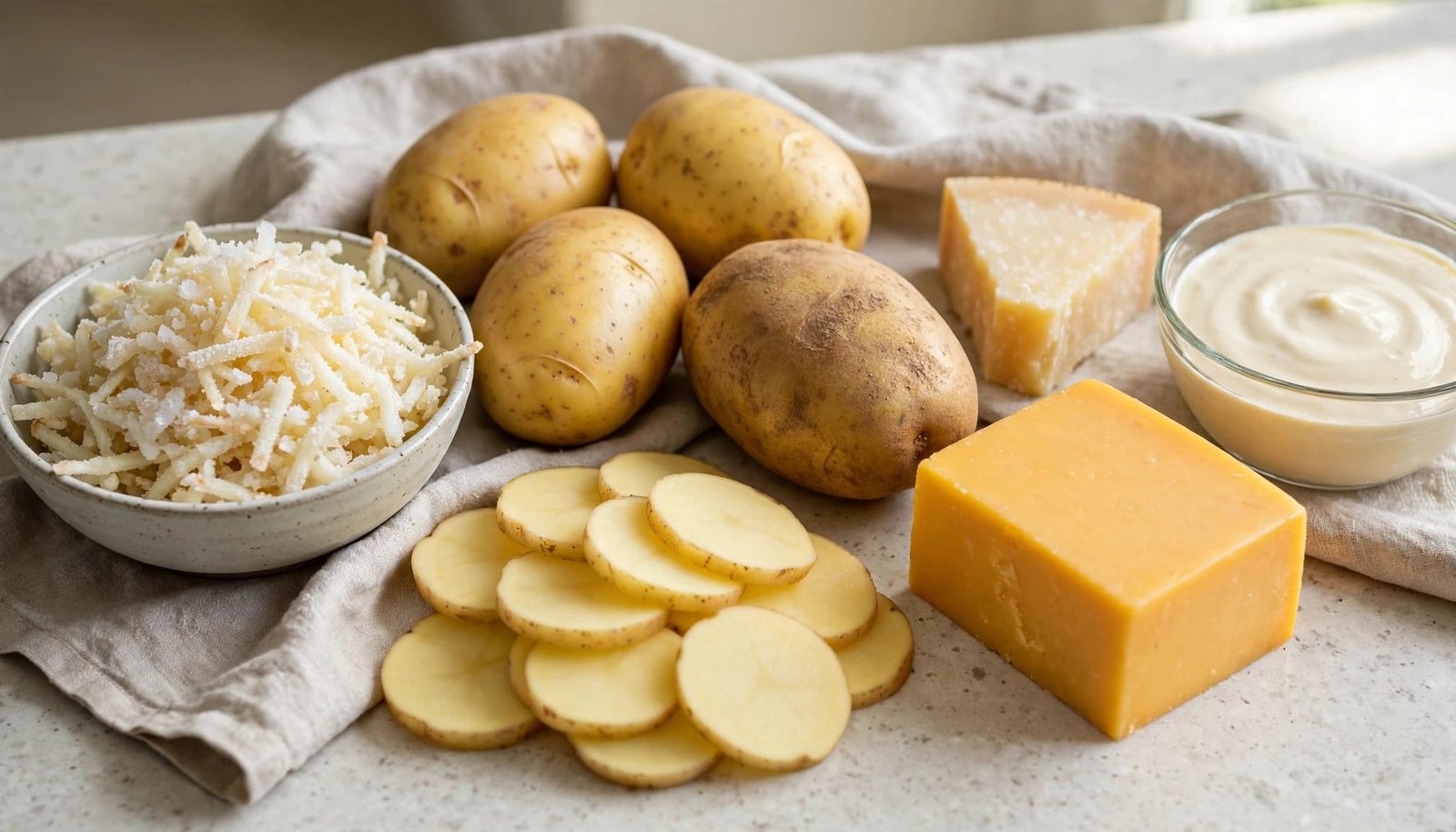
For a classic hash brown casserole, frozen shredded potatoes blend easily into the sauce and create a soft, familiar texture. Diced frozen hash browns hold their shape more distinctly, so choose them when you want larger pieces in each bite. Thaw either style as directed by your recipe, and stir until the creamy mixture reaches the potatoes throughout. Dry pockets can leave parts of the casserole less tender.
Fresh potatoes suit layered gratins and au gratin dishes. Slice them thinly and evenly so they cook at about the same rate. Yukon Gold potatoes offer a creamy texture and hold their shape well; russets soften more as they bake. For more on how potato types behave in different dishes, see the University of Arkansas Division of Agriculture’s potato guide.
Boiled potatoes work well when you want a chunkier cheese bake. Cut them into similar-sized pieces and cook until just fork-tender before combining them with sauce. This gives them a head start without making them fall apart during mixing. For soup, small cubes cook evenly and are easy to spoon. Leftover roasted potatoes can also be gently folded into cheese sauce for a chunkier side.
Build flavor with cheese, sauce, and toppings
Sharp cheddar is a dependable choice for classic cheesy potatoes recipes because it brings a familiar flavor and melts smoothly when stirred into a warm sauce. Parmesan adds a salty, savory note, so sprinkle it over the top or mix a little into a crumb topping. For a milder, stretchy melt, combine cheddar with Monterey Jack or Gruyere cheese. Freshly shredded cheese from a block tends to melt more evenly than many pre-shredded blends.
The creamy base shapes the dish as much as the cheese. Condensed cream soup offers a convenient, thick binder; cream of chicken soup is common, while cream of celery can work as a meat-free alternative. Sour cream adds tang and richness, and you can replace some with plain Greek yogurt for a similar creamy texture with a sharper flavor. For a from-scratch option, make a simple white sauce with butter, flour, and milk, then stir in cheese for a smooth coating.
Mix the binder and seasonings first, then fold in the potatoes until they are evenly covered. If the sauce seems too thick to coat them, loosen it with a small splash of milk. Avoid adding extra liquid by guesswork, since watery potatoes can thin the finished casserole.
Cornflakes make a light, crisp topping, while breadcrumbs give a finer crunch. Panko breadcrumbs stay airy and especially suit a Parmesan topping; crushed potato chips add a salty, bold finish. Whichever you choose, keep it separate until close to baking time. Add it for the final part of baking, or it may soften before the potato mixture is hot.
Bake cheesy potatoes until the middle is tender and the top is crisp
A golden top can make cheesy potatoes look ready before the center has finished cooking. Use the recipe’s temperature and timing as your starting point, then check the casserole itself for tenderness and heat. Many cheesy potato casseroles are cooked in a 350°F to 375°F oven, but the dish size, ingredient temperature, and potato cut can all change how long they need.
Check the center, not just the browned surface
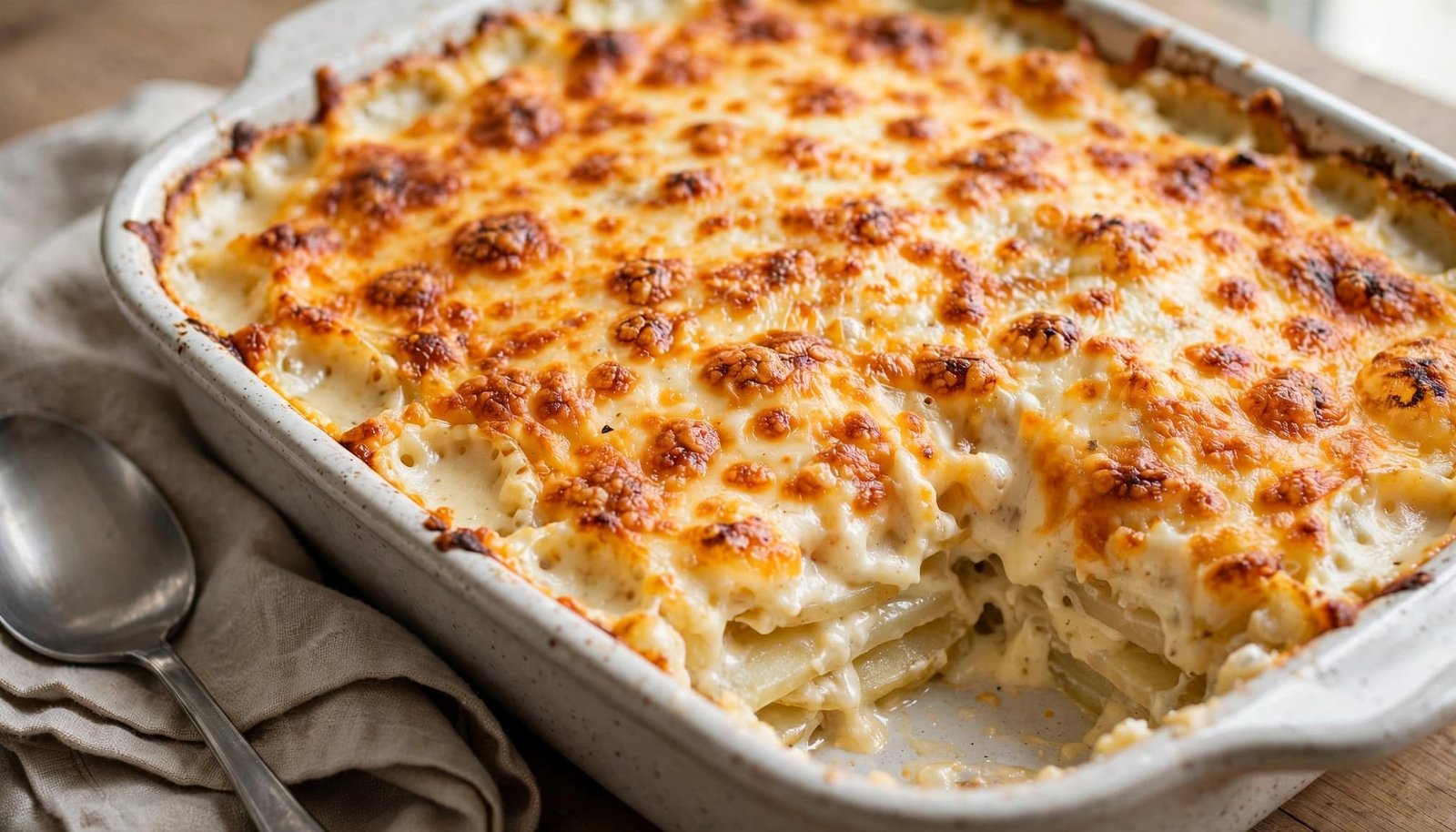
Look for bubbling around the edges and potatoes that feel tender when pierced with a fork. Check near the center of the dish, where the mixture heats more slowly. If the middle still feels firm or cool, give the casserole more time, even if the top has browned.
A food thermometer can help you check that the center has heated through. For casseroles containing meat or poultry, FoodSafety.gov lists 165°F as the safe minimum internal temperature. If the top is already crisp but the center needs more time, cover the dish loosely with foil and continue baking. The foil slows further browning while the potatoes finish cooking.
The exact baking time depends on a few practical details:
- Dish size and depth: A deeper or smaller dish holds a thicker layer, which usually takes longer to heat than a shallow, wide casserole.
- Starting temperature: A casserole straight from the refrigerator needs more time than one assembled with room-temperature ingredients. Follow the recipe’s directions for chilled dishes, and check the center before serving.
- Potato cut: Thin, uniform slices cook more evenly than thick or irregular pieces. Frozen hash browns may heat differently from fresh potatoes, so use the recipe’s timing as a guide rather than assuming the styles bake alike.
Fix dry, firm, or soggy results
Dry patches often mean the potatoes weren’t coated evenly before baking. Mix the sauce or creamy binder thoroughly, then fold it through the potatoes until it reaches the whole mixture. Spread the casserole in an even layer, too, so thinner edges don’t dry out while the middle catches up.
For fresh potatoes, slice pieces to a similar thickness. Uniform slices cook at about the same pace, while thick pieces may remain firm after the thinner ones turn tender. If a fork meets resistance, keep baking and check again after a few minutes. Don’t raise the oven temperature to rush the center, since the top may brown before the potatoes soften.
Crunchy toppings need different timing from the creamy base. Add cornflakes, breadcrumbs, or other crisp toppings for the final portion of baking, as directed in the recipe. If they go on too early, steam from the casserole can soften them before the center is hot. For a topping that browns quickly, add it later or loosely shield it with foil while the potatoes finish.
Make cheesy potato casseroles ahead, then store and reheat them well
Planning ahead can save time, but assembling a casserole and baking one for later are different approaches. In either case, follow the storage limits and directions for your specific cheesy potatoes recipe, since ingredients and methods vary.
Assemble ahead without losing the crisp topping
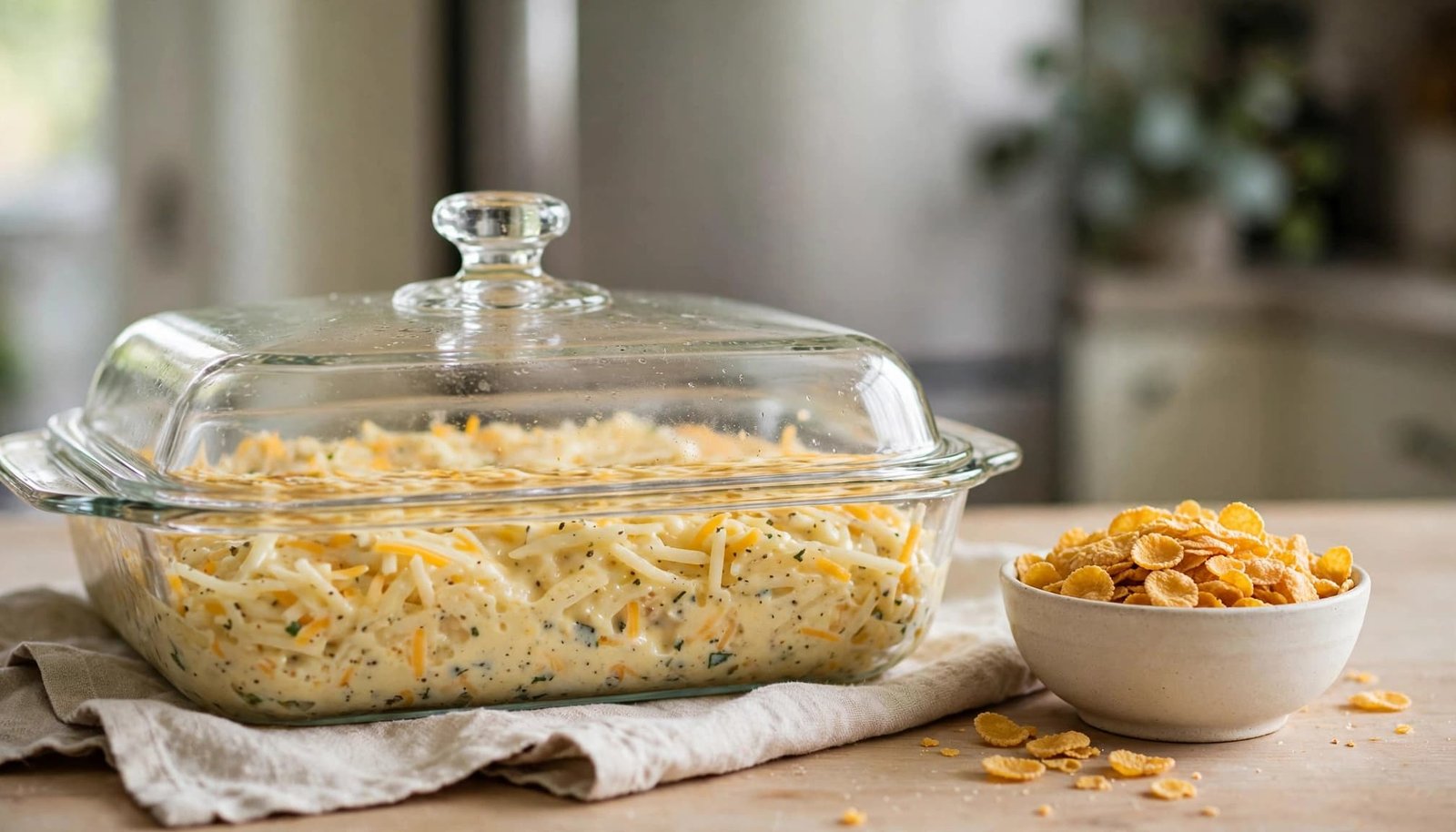
Many cheesy potato casseroles can be mixed in the casserole dish, covered, and refrigerated before baking. However, recipes differ on how long an unbaked dish can stay chilled. Check the recipe’s make-ahead instructions rather than assuming every casserole can be prepared the same number of days in advance.
Keep cornflakes, breadcrumbs, or other crunchy toppings in a separate container until just before baking. That way, moisture from the potato mixture won’t soften them in the refrigerator. When you’re ready to cook, add the topping as directed and place the dish in the oven. If you prepare the mixture in a slow cooker, keep the crunchy topping separate until serving.
A cold casserole may need more time to bake than one that starts closer to room temperature. Follow the recipe’s guidance for chilled dishes, and check the center for doneness instead of relying only on the original bake time. If the top browns before the middle is hot and tender, cover the dish loosely with foil and continue baking.
Freeze and reheat for an easier meal
To freeze cheesy potatoes, follow the recipe’s instructions for freezing the casserole before or after cooking. For an unbaked casserole, the directions may specify whether to freeze it with the topping or hold that back. Baked casseroles should cool before freezing, and their texture may change after thawing.
When the recipe calls for thawing, move the frozen dish to the refrigerator and let it thaw there. Then bake or reheat it according to the recipe, allowing extra time if the center is still cold. If the top darkens too quickly, cover it loosely with foil while the rest heats through.
For baked leftovers, divide large portions into shallow containers so they cool more quickly, and refrigerate them within two hours. USDA guidance says most cooked leftovers keep for three to four days in the refrigerator; recipe-specific storage directions may vary. Reheat leftovers until the center reaches 165°F, checking with a food thermometer. See the USDA’s leftover food safety guidance for more details.
Frequently Asked Questions
Still deciding which cheesy potato dish fits your meal? These answers cover common swaps and serving ideas that aren’t part of the recipes themselves.
Are funeral potatoes the same as hash brown casserole?
Funeral potatoes are a popular style of hash brown casserole, usually made with frozen potatoes, a creamy binder, cheese, and a crisp topping. The name is linked to the dish’s place at funeral luncheons and other gatherings in some communities. For a familiar version, see Food & Wine’s funeral potatoes recipe.
Can I add ham or bacon to cheesy potatoes?
Yes. Fold in cooked, chopped ham or crisp bacon before baking, or scatter it over the top with the cheese. Since both meats add salt, taste the potato mixture before adding extra seasoning. For a more substantial meal, serve the casserole with a simple vegetable or salad.
How can I make cheesy potatoes vegetarian?
Use cream of celery or cream of mushroom soup instead of cream of chicken in the hash brown casserole. For the soup recipe, choose vegetable broth. Check labels on packaged broth and soup, since ingredients vary by brand, and keep in mind that some cheeses use animal-derived rennet.
What should I serve with cheesy potatoes?
Their creamy, rich texture pairs well with roasted chicken, baked ham, or grilled vegetables. For a lighter plate, add a crisp green salad or steamed green beans. If the potatoes are part of a holiday meal with several rich sides, a tart vinaigrette or fresh vegetables can bring balance.
Do cheesy potatoes work for breakfast or brunch?
They do, especially the hash brown casserole, which fits naturally alongside eggs and fruit. You can add cooked breakfast sausage or bacon, but keep the portions modest so the dish doesn’t become overly salty or heavy. The sliced-potato version also pairs well with a simple egg dish.
Can I halve a cheesy potatoes recipe?
Yes. Halve the ingredients and use a smaller baking dish so the mixture doesn’t spread too thinly. The cooking time won’t necessarily be half as long, so start checking for tender potatoes and a hot center before the recipe’s full bake time. If the top browns early, cover it loosely with foil while the center finishes.
Conclusion
These cheesy potatoes recipes offer a fitting option for a cozy dinner or a shared holiday meal. Choose the classic hash brown casserole for an easy crowd-pleaser, a fresh potato gratin when you want tender layers, or the stovetop version when time is short.
Start with the main recipe, then adjust the cheese or topping to suit your table. With evenly coated potatoes and a crisp topping added at the right time, you can make a comforting dish that fits your meal and your cravings.