


Losing job-based coverage, aging out of a parent’s plan, starting freelance work, or leaving a family policy can make buying individual health insurance plans feel confusing and expensive. If dependents need coverage too, you may also compare family health insurance plans. Your choices may include ACA Marketplace coverage, Medicaid, CHIP, COBRA, short-term policies, or other alternatives.
This guide explains eligibility, enrollment dates, premiums, deductibles, subsidies, provider networks, public programs, and key differences between plan options. Exchange eligibility and enrollment rules determine who can get health insurance coverage and when. Rules, prices, financial assistance, and insurer choices can change by state and year, so verify final details through HealthCare.gov or your state’s official exchange before enrolling. Start by comparing how Marketplace eligibility and enrollment work. For additional context, see: https://www.youtube.com/watch?v=1RaI9g9McM4
Key Takeaways
- ACA Marketplace plans are the main option for people without job-based insurance. HealthCare.gov lets you compare estimated 2026 prices before applying.
- Premium tax credits may lower monthly premiums. Eligibility and savings depend on household income, family size, and current federal rules.
- Compare more than premiums. Check deductibles, copays, provider networks, prescription coverage, and the annual out-of-pocket maximum.
- ACA-compliant plans have a 2026 out-of-pocket limit of $10,150 for self-only coverage and $20,300 for family coverage.
- Your income may qualify you for Medicaid or CHIP, which typically have lower out-of-pocket costs. Check Marketplace savings and income limits and 2026 plan prices.
How Individual Health Insurance Plans Work in the USA
Without an employer plan, you usually buy coverage through the ACA Marketplace, a state Medicaid or CHIP program, or an insurance company. Your best option depends on your income, household, location, age, and expected medical needs.
Marketplace Coverage, Direct-Purchase Plans, Medicaid, and CHIP
The ACA Marketplace is usually the best starting point because one application checks coverage options and financial assistance. Eligible applicants may receive an advance premium tax credit that lowers the monthly premium. Some people also qualify for cost-sharing reductions, which lower deductibles, copayments, and coinsurance with a Silver plan. You can compare available policies through HealthCare.gov’s Marketplace guide.

A Marketplace application can also screen your household for Medicaid and CHIP. These Medicaid plans are state-administered public coverage, while Marketplace policies are private exchange plans. If the information suggests that someone may qualify, the Marketplace sends the application to the state agency, which contacts the applicant. Medicaid rules vary by state, so eligibility and benefits can differ significantly depending on where you live. CHIP provides low-cost coverage for eligible children in families who earn too much for Medicaid.
You can buy an individual policy directly from an insurer or through a broker. However, direct-purchase plans generally don’t qualify for Marketplace premium tax credits or cost-sharing reductions, even when their benefits look similar. Compare the full annual cost before choosing convenience over potential savings.
What ACA Plans Must Cover and What They May Exclude
ACA Marketplace plans must cover essential health benefits, including hospital care, emergency treatment, prescription drugs, maternity and newborn care, mental health and substance use treatment, laboratory services, and preventive care. These certified policies are called Qualified Health Plans and must meet ACA standards. They also must cover pre-existing conditions without charging you more because of your medical history. The official Marketplace coverage list explains these categories.
Preventive care is generally free when you use an in-network provider and meet applicable coverage rules. Adult dental care and vision coverage may require separate dental insurance plans, since they aren’t essential health benefits. Other supplemental plans can help cover services that comprehensive policies exclude. Health plan benefits can still vary, with some treatments excluded or limited, prior authorization required, and networks restricted to specific doctors or facilities. Always review the Summary of Benefits and Coverage before enrolling.
When and Where to Enroll in 2026 Health Insurance
The federal Marketplace open enrollment period commonly runs from November 1 through January 15. For 2026 coverage, HealthCare.gov accepted applications from November 1, 2025, through January 15, 2026. Choosing a plan by December 15 generally allowed coverage to begin January 1. Later selections usually started February 1. State exchanges may use different deadlines, so confirm dates before applying.
The 2026 Marketplace attracted 23.1 million plan selections nationwide, showing how widely people rely on this coverage after losing employer insurance or becoming self-employed.
What You Need for a Marketplace Application
Gather your household information before you begin. You may need:
- Each applicant’s full name and birth date.
- Social Security numbers, or immigration document details for eligible immigrants.
- Your home address and mailing address.
- An estimate of your household income for the coverage year.
- Tax-filing status and information about everyone on your tax return.
- Details about current health coverage, including its end date.
- Information about any employer coverage offered to you or your household members.
Your income estimate matters because the Marketplace uses it to calculate premium tax credits and other savings. Use expected annual earnings for the coverage year, not only your current paycheck. A large error can reduce your financial help or leave you owing money when you file taxes.
Update the application after a job change, marriage, move, income change, or loss of coverage. These events can change your eligibility, financial assistance, plan options, or enrollment period.

Do State Exchanges and State Subsidies Change Your Options?
HealthCare.gov operates in states that use the federal platform. Other states and Washington, DC, run their own exchanges. These may offer different insurers, comparison tools, deadlines, and local enrollment assistance.
For 2026, the enhanced federal premium tax credits expired at the end of 2025. Standard ACA premium tax credits remain available to eligible households, but savings may be smaller or eligibility may differ by income, household size, and state rules.
New Mexico fully replaced the expired enhanced federal credits with state-funded assistance. Other states may provide partial government subsidies, so check your state exchange rather than relying on a nationwide income example. Start with HealthCare.gov’s Marketplace or review special enrollment rules after losing coverage, getting married, having a baby, adopting a child, moving, or losing Medicaid.
Compare Individual Health Insurance Plans by Coverage, Network, and Metal Tier
The lowest monthly premium isn’t always the lowest-cost choice among health insurance plans. Compare what you pay before care, what you pay during treatment, and whether the plan covers your preferred doctors, hospitals, and prescriptions.

Bronze, Silver, Gold, or Platinum: Which Tier Fits Your Budget?
Metal tiers classify Marketplace Qualified Health Plans by cost sharing, not the quality of care. Bronze plans usually have a lower monthly premium but higher deductibles and copays when you use services. Gold and Platinum plans generally cost more each month while covering a larger share of covered care.
A healthy person who wants protection from major medical bills may prefer Bronze, especially if they can handle a high deductible. A family with regular prescriptions, specialist visits, or ongoing treatment may save money with Gold or Platinum. Silver often deserves the closest look because eligible enrollees receive cost-sharing reductions only through qualifying Silver plans. Those savings can lower deductibles, copays, coinsurance, and annual out-of-pocket limits. Some supplemental plans may also help offset certain costs, but they don’t replace comprehensive coverage. Review HealthCare.gov’s metal tier explanation before comparing premiums.
Check Doctors, Hospitals, Prescriptions, and Network Rules
Search the exact plan’s provider directory, then call your doctors, preferred hospital, and pharmacy before enrolling. Plan details can differ by county, even when two policies carry the same insurer name.
- HMOs usually use local networks and may require referrals for specialists.
- PPOs often allow out-of-network care at a higher cost.
- EPOs typically cover only in-network routine care, except for emergencies.
Emergency coverage doesn’t mean routine out-of-network visits will be covered. Also check the drug formulary, specialty pharmacy requirements, prior authorization, step therapy, Virtual care, and telehealth benefits. A plan with a low premium can become expensive if it excludes your hospital or places a regular medication on a costly tier.
Can You Use an HSA With a Marketplace Plan?
HSA eligibility depends on the exact plan and current IRS rules, not simply its Bronze label. For 2026, certain Bronze and catastrophic Exchange plans receive special HSA treatment, while other plans must meet high-deductible health plan requirements.
An HSA can offer tax advantages, and you can use its funds for qualified medical expenses. Confirm the plan’s HSA-qualified status before opening or contributing to an account. Also check for disqualifying coverage, Medicare enrollment, or dependent status in the IRS’s HSA guidance.
Understand Health Insurance Costs Before You Choose a Plan
The monthly premium is only the entry price for individual health insurance plans. Your actual yearly cost also depends on deductibles, copays, coinsurance, prescriptions, uncovered services, and the plan’s out-of-pocket maximum.

How Premium Tax Credits and Cost-Sharing Reductions Lower Costs
A premium tax credit reduces the monthly premium you pay for an eligible Marketplace plan. The Marketplace calculates your potential credit using household income, family size, location, and the cost of available plans. You can apply some, all, or none of the credit each month, but using too much may lead to a tax adjustment later.
For 2026 coverage, the temporary enhanced federal premium tax credits ended after 2025. The standard ACA subsidy formula now applies again, including the 400% federal poverty level income cutoff for eligibility. Your household size and coverage year determine the applicable income amount, so use the Marketplace application instead of relying on a generic dollar estimate.
Cost-sharing reductions lower what you pay when you receive covered care. They can reduce your deductible, copayments, coinsurance, and annual out-of-pocket limit. However, you must qualify financially and choose an eligible Silver plan to receive them. Review the Marketplace premium tax credit rules and cost-sharing reduction details before comparing metal tiers.
Find the Lowest Total-Cost Plan, Not Just the Lowest Premium
Use this short checklist before choosing a plan:
- Estimate your annual premiums after any tax credit.
- Check the deductible and whether office visits or prescriptions bypass it.
- Compare copays, coinsurance, and drug costs for the care you expect.
- Review the in-network out-of-pocket maximum.
- Confirm that your doctors, hospital, medications, and planned services are covered.
- Identify exclusions, prior authorization rules, and services that aren’t covered.
Ask yourself whether you expect regular visits, expensive prescriptions, therapy, specialist care, pregnancy care, or a planned procedure. Then estimate likely health care costs and add them to your annual premiums. Finally, check your worst-case in-network cost by adding your annual premium total to the plan’s out-of-pocket maximum. Premiums don’t count toward that maximum, and out-of-network or uncovered care may cost extra.
A Silver plan with cost-sharing reductions may cost less overall than a cheaper Bronze plan for someone who uses frequent care. The lowest premium wins only when the rest of the cost structure fits your medical needs and makes the medical insurance plan cost-effective overall.
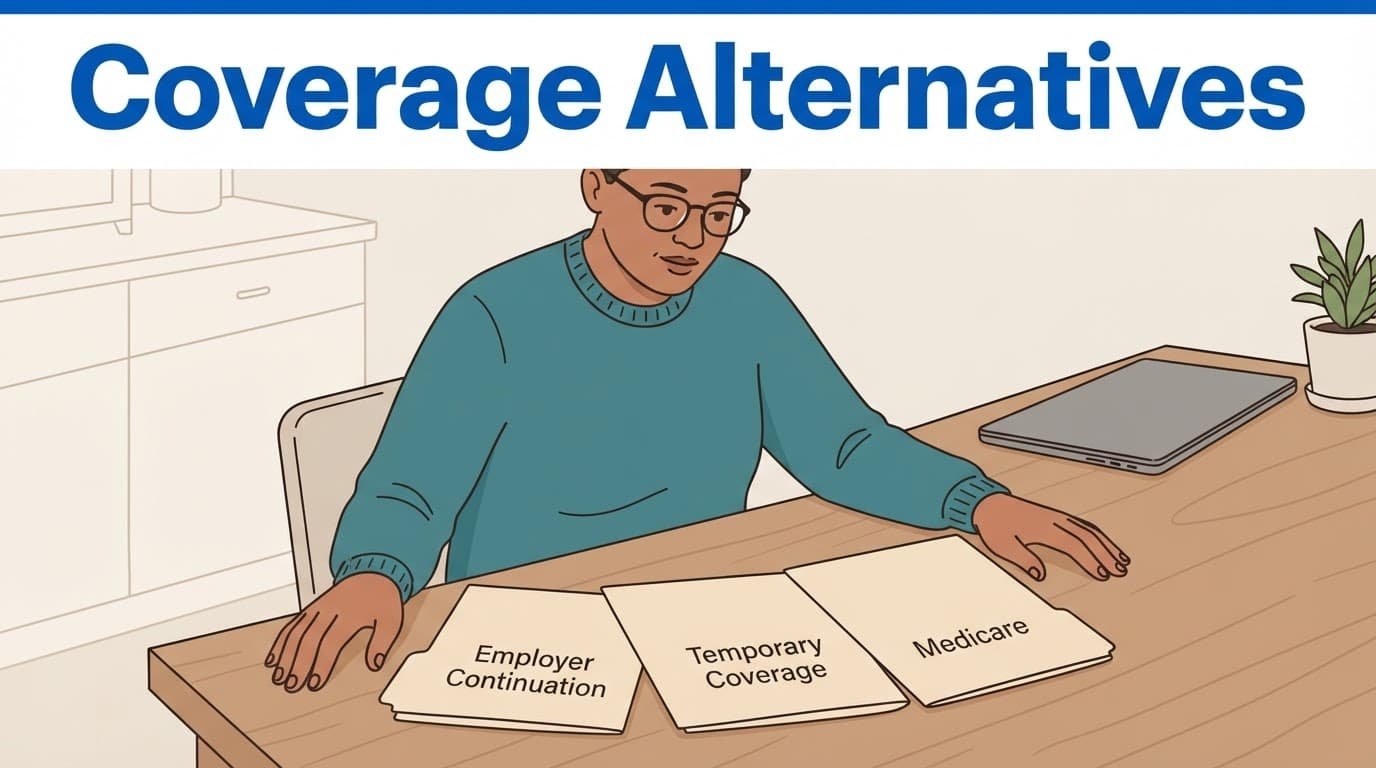
Know Your Alternatives: COBRA, Short-Term Plans, and Medicare
Individual health insurance plans aren’t your only option after losing job-based coverage or reaching Medicare eligibility. The right choice depends on your timing, medical needs, budget, and access to doctors.
COBRA or Marketplace Coverage After Losing a Job
COBRA lets you keep the same employer health plan for a limited period. You may keep your doctors, deductible progress, prescription benefits, and other plan features without starting over with a new insurer.
The drawback is cost. Your former employer usually stops paying its share, so you may owe the full premium plus an allowed administrative fee. Marketplace coverage may cost less if you qualify for premium tax credits, but it can come with different deductibles, drug formularies, and provider networks.
Compare these details before choosing:
- Your total monthly premium under COBRA and Marketplace coverage.
- Any deductible or out-of-pocket spending you’ve already accumulated.
- Your regular prescriptions and expected medical services.
- Access to your doctors, hospital, and preferred pharmacy.
- The COBRA election deadline, which is generally 60 days from the later of the coverage loss or notice date.
COBRA can make sense when you’re in active treatment or have already paid much of the deductible. A Marketplace plan may be a better fit when subsidies significantly reduce the premium.
People using COBRA or short-term coverage can also consider supplemental plans and standalone dental insurance plans for specific needs.
Are Short-Term Health Plans Worth the Risk?
Short term health insurance is designed for temporary gaps, not as a replacement for comprehensive ACA coverage. These policies aren’t Marketplace plans and may exclude preexisting conditions, mental health care, maternity services, essential benefits, or prescription drugs.
Some TriTerm Medical plans may provide a longer temporary coverage period than basic short-term policies, depending on state and insurer rules. TriTerm Medical plans aren’t available everywhere, so review the policy term, renewability, and exclusions before enrolling.
A low premium can hide substantial financial risk. The policy may impose benefit limits, exclude specific treatments, or deny claims related to medical conditions that existed before enrollment. Federal rules generally limit newer short-term plans to an initial term of three months and a total duration of four months, including renewals. State rules may be stricter.
Read the complete policy certificate before enrolling, and confirm the federal and state limits that apply where you live.
Moving From Marketplace Coverage to Medicare
Review your Marketplace plan when you become eligible for Medicare, often around age 65 or because of disability. Marketplace premium tax credits generally end when Medicare becomes available, and keeping subsidized Marketplace coverage can create a tax repayment problem.
Compare Medicare plans and report your Medicare start date before coordinating the Marketplace end date. You can review when Medicare coverage starts before canceling your existing plan. Follow Medicare enrollment deadlines carefully, since COBRA doesn’t necessarily extend them.
Frequently Asked Questions
Individual health insurance plans can vary by income, location, age, and enrollment reason. These answers address common questions about Marketplace plans, costs, and alternatives.

Can I get individual health insurance outside Open Enrollment?
Yes, but you generally need a qualifying life event for a Special Enrollment Period. Losing job-based coverage, getting married, having a baby, adopting a child, or moving may create an enrollment window. You may need to provide supporting documents. HealthCare.gov explains current Special Enrollment Period rules.
If you don’t qualify for an open enrollment period, short-term coverage may help fill a temporary gap. In some states, options such as TriTerm Medical plans are available, but benefits, eligibility, and consumer protections vary.
What happens if my income changes during 2026?
Update your Marketplace application as soon as your expected household income changes. The Marketplace can adjust your premium tax credit. This may help prevent a large repayment or unexpected balance when you file your federal tax return.
Can I change my Marketplace plan after enrolling?
You can change plans during the annual enrollment window, which runs from November 1 through January 15 for plan years through 2026. Outside that period, you can switch only if you qualify for a qualifying event. Review plan change and renewal options before canceling existing coverage.
Why did my Marketplace premium increase for 2026?
The temporary enhanced federal premium tax credits ended after 2025. As a result, some households receive less financial assistance in 2026. Your premium can also change because of age, location, insurer pricing, household income, or your selected plan. Update your application to see your current savings instead of relying on last year’s price.
Can I qualify for Medicaid and Marketplace coverage at the same time?
You can apply through the Marketplace, which checks whether your household may qualify for Medicaid or CHIP. However, Medicaid eligibility generally prevents you from receiving a premium tax credit for Marketplace coverage. Compare the official eligibility decision before selecting a plan.
What should I do if a doctor says my plan is not accepted?
Call the insurer using the number on your member ID card. Ask whether the provider is in-network for your exact plan, not just the insurer’s broader network. You can also contact Member Services for help confirming network status. If the directory was inaccurate, save screenshots and call records, then ask about the insurer’s directory error or continuity-of-care process.
Conclusion
Choosing among individual health insurance plans starts with confirming your eligibility for Marketplace coverage, Medicaid, or CHIP. Compare plans by checking your doctors, hospitals, prescriptions, deductible, copays, coinsurance, and estimated total yearly cost. Review premium tax credits and cost-sharing reductions carefully, since a lower monthly premium may still mean higher costs when you need care.
Complete your application before the applicable enrollment deadline, or check whether a qualifying life event gives you a Special Enrollment Period. The best plan isn’t always the one with the lowest premium. Before enrolling, verify 2026 prices, provider networks, deadlines, and state assistance through HealthCare.gov, your state exchange, or a licensed enrollment assister. Careful comparison can help you choose health insurance plans that fit both your budget and expected health care needs.